Welcome to the Mathematical World!
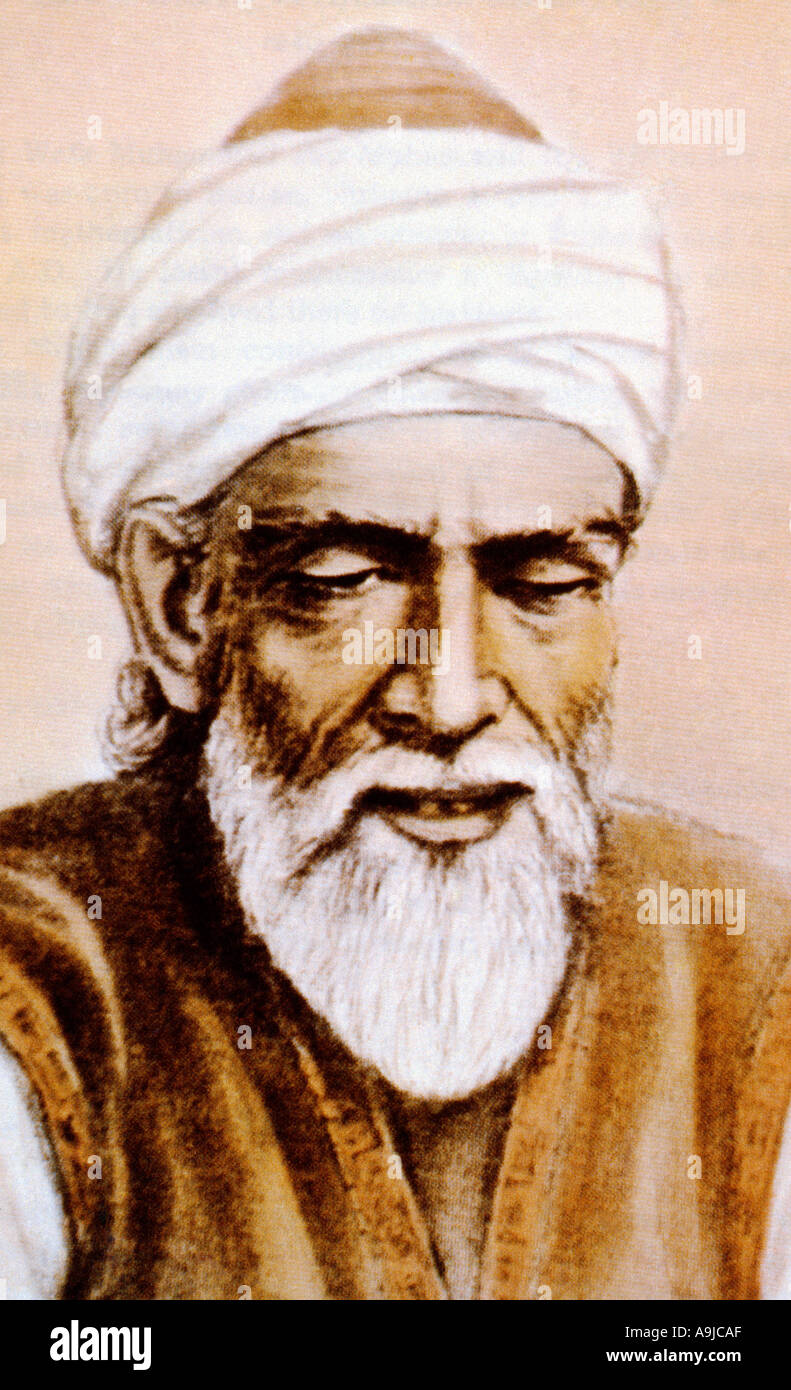
Abu al-Wafāʾ al-Būzjānī
Persian Mathematician and Astronomer of the Baghdad Observatory
Abū al-Wafāʾ al-Būzjānī (10 June 940 – July 998 CE) was a distinguished Persian mathematician and astronomer active in Baghdad. He collaborated with the Baghdad observatory team under the Buyid Caliphate and made pioneering contributions across trigonometry, arithmetic, and astronomical instrumentation.:contentReference{index=0}
Mathematics and Trigonometry
Abū al-Wafāʾ was the first to use the tangent function and compiled extremely accurate tables of sines and tangents at 15′ intervals—correct to eight decimal places, far surpassing earlier works.:contentReference{index=1} He also introduced the secant and cosecant functions, and formalized the interrelations of the six trigonometric lines (sine, cosine, tangent, cotangent, secant, cosecant).:contentReference{index=2} Moreover, he proved the law of sines for spherical triangles: \[ \frac{\sin A}{\sin a} = \frac{\sin B}{\sin b} = \frac{\sin C}{\sin c} \]
He also introduced and proved key trigonometric identities, such as:
\[
\sin(a \pm b) = \sin(a)\cos(b) \pm \cos(a)\sin(b)
\]
\[
\cos(2a) = 1 - 2\sin^2(a)
\]
\[
\sin(2a) = 2\sin(a)\cos(a)
\]
Astronomy and Observational Work
Working at the Baghdad observatory established in 988 CE, he constructed the first known wall quadrant for precise celestial measurements.:contentReference He participated in a pioneering experiment in 997 CE, determining the longitude difference between Baghdad and Kath via simultaneous lunar eclipse observations—yielding results very close to modern calculations.:contentReference{index=6} His astronomical writings, especially the first seven treatises of his Almagest, were widely used by later astronomers.:contentReference{index=7}
Practical Works and Arithmetic
He authored accessible mathematical texts, including a guide for scribes and merchants—Kitāb fī mā yaḥtāj ilayhi al-kuttāb wa’l-ʿummāl—notable for containing the first instance of negative numbers in medieval Islamic arithmetic.:contentReference{index=8} He also wrote a geometric construction manual—Kitāb fī mā yaḥtāj ilayhi al-ṣāniʿ min al-aʿmāl al-handasiyya—featuring solutions to classical geometric problems such as constructing the regular heptagon via neusis and fixed-compass methods.:contentReference{index=9}
Legacy and Recognition
- His observational data informed astronomers such as al-Biruni for centuries.:contentReference{index=10}
- The lunar crater Abul Wafāʾ and a Google Doodle (10 June 2015) commemorate his contributions.:contentReference{index=11}
- Modern historians regard him as a pivotal figure in the development of trigonometry, astronomical instrumentation, and applied mathematics during the Islamic Golden Age.:contentReference{index=12}

All rights reserved by the Mathematical Unity
Contact: +8801400044645
Email: mathematicalhorse1453@gmail.com
Our Discord Server: Mathematical Unity [Ulus Riyadiyat]